Insulation isn’t exactly the most interesting home improvement topic.
But if you’re tired of watching your heating bill climb every time the temperature drops, or you’re planning a renovation and need to make decisions, then you need to know the difference between spray foam and fiberglass.
Both will insulate your home. But they work differently, cost differently, and one might make way more sense for your situation than the other. So let’s break down what matters when you’re trying to decide between spray foam insulation in New York and the fiberglass alternative.
What We’re Comparing
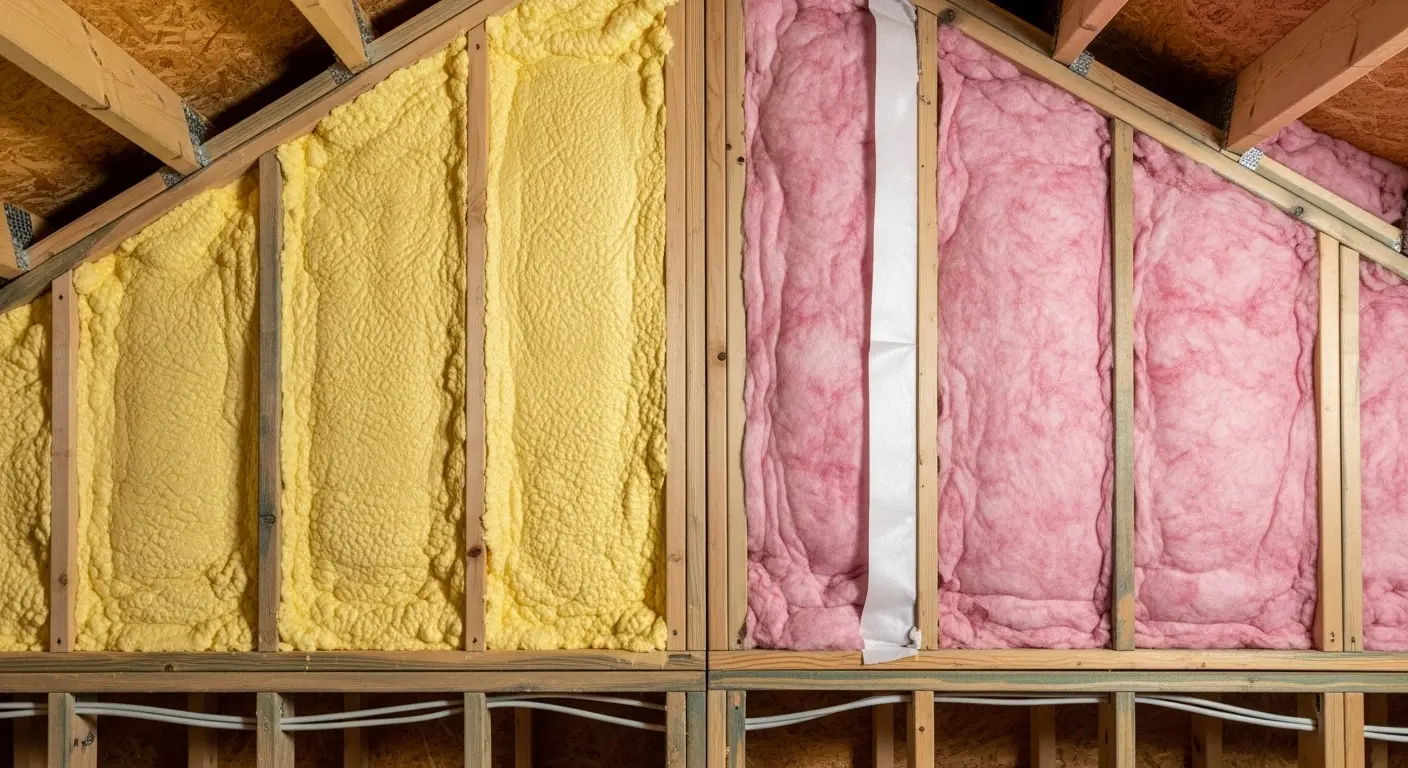
Fiberglass insulation is what most people picture when they think of insulation: pink, fluffy batts that look like cotton candy made of glass. Because essentially, that’s what it is. Tiny glass fibers that are spun together into a mat. It comes in pre-cut rolls or batts that fit between wall studs and ceiling joists.
Spray foam insulation is completely different. It’s a liquid chemical mixture, made up of isocyanate and polyol resin, that gets sprayed into place, expands, and hardens into solid foam. It fills every crack, gap, and corner.
Spray Foam Insulation vs Fiberglass Insulation: Comparison Table
| Feature / Factor | Spray Foam Insulation | Fiberglass Insulation |
|---|---|---|
| Material Type | Polyurethane foam (two-part chemical mixture) | Glass fibers bonded with resin |
| Forms Available | Closed-cell and open-cell spray | Batts, rolls, loose-fill |
| R-Value (Thermal Resistance) | High: approx. R-3.5–R-6.5+ per inch (depends on type) | Moderate: approx. R-2.9–R-3.8 per inch |
| Air Sealing Capability | Excellent — acts as an air barrier, reducing drafts | Poor — does not block air without additional air sealing |
| Moisture Resistance | Closed-cell resists moisture; open-cell can absorb some moisture | Poor — can hold moisture and lead to mold if wet |
| Installation Method | Sprayed on-site using specialized equipment | Installed manually (batts/rolls) or blown-in |
| Installation Difficulty | Requires trained professionals | Easier — installers or DIY (batts/rolls) |
| Cost | Higher upfront cost | Lower upfront cost |
| Energy Efficiency | Better due to higher R-value and air sealing | Good but performs less efficiently due to air gaps |
| Soundproofing | Open-cell provides good sound dampening | Moderate acoustic performance |
| Lifespan | Very long — typically 40+ years with no settling | Long, but may settle/compress over time |
| Maintenance | None once properly installed | Minimal, but may need inspection for sagging or moisture damage |
| Environmental Impact | Some types use blowing agents with GWP; newer options are greener | Made from recycled glass; low toxicity |
| Best Used For | Air sealing, energy efficiency, irregular cavities | Standard wall cavities, attic, basement floors |
| Ideal For | New builds, energy-efficient homes | Budget-friendly projects |
| Fire Safety Requirements | Must be covered with thermal barrier (e.g., drywall) | Generally fire-resistant without extra coverings |
| Health Considerations During Installation | Requires PPE; off-gases as it cures | Fibers can irritate skin, eyes, lungs; PPE needed |
| Performance in Extreme Temperatures | Excellent — maintains R-value over time | Stable R-value but less effective without air sealing |
| Installation Speed | Fast for professionals | Moderate; depends on method |
The R-Value Comparison
R-value measures how well insulation resists heat flow. A higher R-value means better insulation. This is the first thing to understand because everything else builds from here.
Spray foam wins this round decisively. Closed-cell spray foam has an R-value of around 6.5 to 7 per inch. Open-cell spray foam sits around 3.5 per inch. Fiberglass is about 2.2 to 2.7 per inch.
If you need to hit an R-38 insulation level, you’d need about 6 inches of closed-cell spray foam. With fiberglass, you’d need roughly 17 inches to achieve the same result.
Another thing worth noting is that spray foam maintains its R-value over time. Fiberglass can settle, compress, and lose effectiveness, especially if it gets wet or is disturbed. After 10 -15 years, that fiberglass in your attic might not be doing as much as it did when it was new.
Also Read: Benefits of Using Spray Foam Insulation in Your Home
Air Sealing
Fiberglass insulation slows down heat transfer by trapping air in its fibers. But it doesn’t stop air from moving through it. Studies show that about 30% of heating and cooling can escape through gaps and air leaks even when fiberglass is installed.
Spray foam, on the other hand, creates an actual air barrier. When it expands, it fills every tiny crack, seam, and gap. This means you’re slowing heat transfer and stopping air movement entirely.
Installation
Fiberglass insulation is DIY-friendly. Not easy, but a motivated homeowner with a weekend can absolutely install fiberglass batts in an attic or unfinished walls.
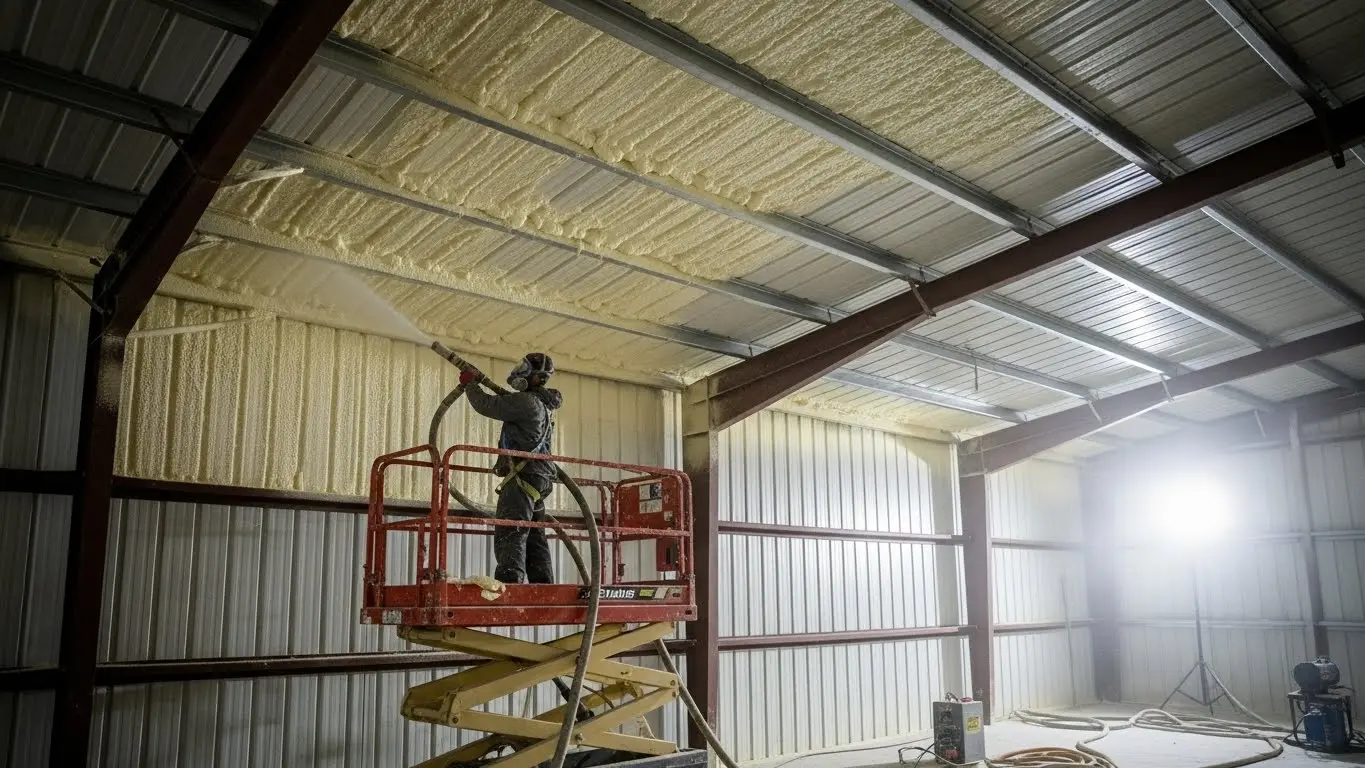
Spray foam, on the other hand, requires a professional. The chemicals need to be heated, mixed at the right proportions, and sprayed at the correct temperature. Mess it up, and you get gaps, over-expansion, or foam that doesn’t cure properly. Those sorts of chemicals are also hazardous if not handled correctly.
This means the labor cost for spray foam is built in; you’re paying for specialized equipment and trained installers. With fiberglass, if you’re willing to do the work yourself, you’re only paying for materials.
Moisture and Mold
Closed-cell spray foam is waterproof. It doesn’t absorb moisture, which means it won’t grow mold and won’t lose effectiveness if it gets wet. This makes it ideal for basements, crawl spaces, and anywhere moisture is a concern.
Fiberglass, on the other hand, is a sponge. Once wet, it loses its insulating properties. It can also trap moisture and become a breeding ground for mold. If your basement floods or you have a roof leak, wet fiberglass insulation is no longer useful.
Lifespan and Durability
Spray foam can last more than eight decades once it’s installed. It doesn’t settle, doesn’t compress, and doesn’t degrade unless something really unusual happens to it.
Fiberglass can theoretically last 100 years, but that’s under perfect conditions. In reality, it settles over time, can get compressed by foot traffic in attics, loses effectiveness if it gets wet, and can be displaced by rodents or human activity. Most fiberglass insulation needs attention or replacement within 15-25 years.
So, Which Is Better?
It depends on what you’re trying to solve and what you’re willing to spend.
Choose spray foam if you want the best insulation performance or are planning to stay in your house long enough to recoup the higher upfront cost through energy savings.
Choose fiberglass if you’re on a tight budget, doing a DIY project, insulating a space that doesn’t have moisture issues, or just need to meet minimum code requirements without overthinking it.
If you’re in New York and trying to figure out which insulation actually makes sense for your house, Foam Insulation Solution specializes in spray foam insulation in New York for residential and commercial properties. We’ll assess your specific situation, not just sell you the most expensive option, and help you understand what you actually need versus what you’re being told you need.
Whether you go with spray foam or fiberglass, make sure it’s installed right. We’ll do that for you. We’re just a call away.