Insulation is one of the most important investments you can make in your home, from keeping it comfortable to making it more efficient. Yet many homeowners stick with traditional insulation options simply because they’re familiar, without realizing that newer technologies like spray foam offer significant advantages.
Understanding the differences between spray foam insulation service and traditional insulation materials can help you make an informed decision that saves money and improves comfort for decades to come.
Traditional Insulation Options
Traditional insulation typically falls into a few main categories.
- Fiberglass batts are the pink or yellow fluffy material most people picture when they think of insulation. It comes in pre-cut sections designed to fit between wall studs and ceiling joists.
- Blown-in cellulose, made from recycled paper products, is another common option that’s loose and can be blown into attics or wall cavities.
- Mineral wool, though less common, offers similar properties to fiberglass but with better fire resistance.
These materials have been the industry standard for generations, primarily because they’re relatively inexpensive and easy to install. Fiberglass batts are available at every home improvement store, and many homeowners feel comfortable installing them on their own. For contractors, the installation is straightforward and doesn’t require specialized equipment beyond a staple gun and utility knife.
However, traditional insulation has inherent limitations. These materials work by trapping air in their fibers, which slows heat transfer. The problem is that air can still move through and around the insulation, especially if it’s not installed perfectly. Gaps around outlets, plumbing penetrations, or imperfectly fitted batts create pathways for air to flow, significantly reducing the insulation’s effectiveness.
How Does Spray Foam Insulation Work?
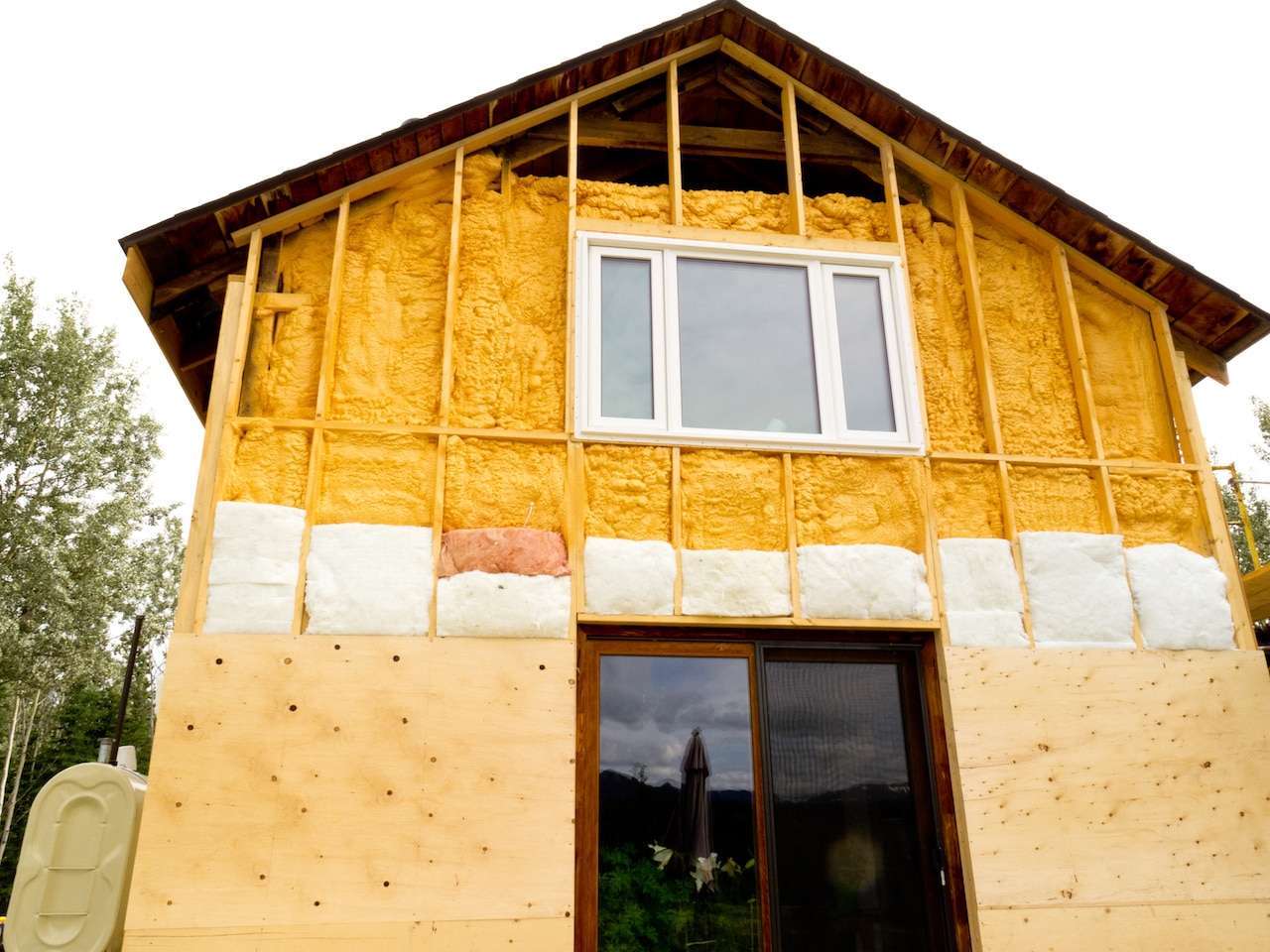
Spray foam insulation takes a completely different approach. It’s applied as a liquid that expands and hardens into a solid foam, filling every crack, gap, and crevice. This creates an airtight seal that traditional insulation simply cannot match.
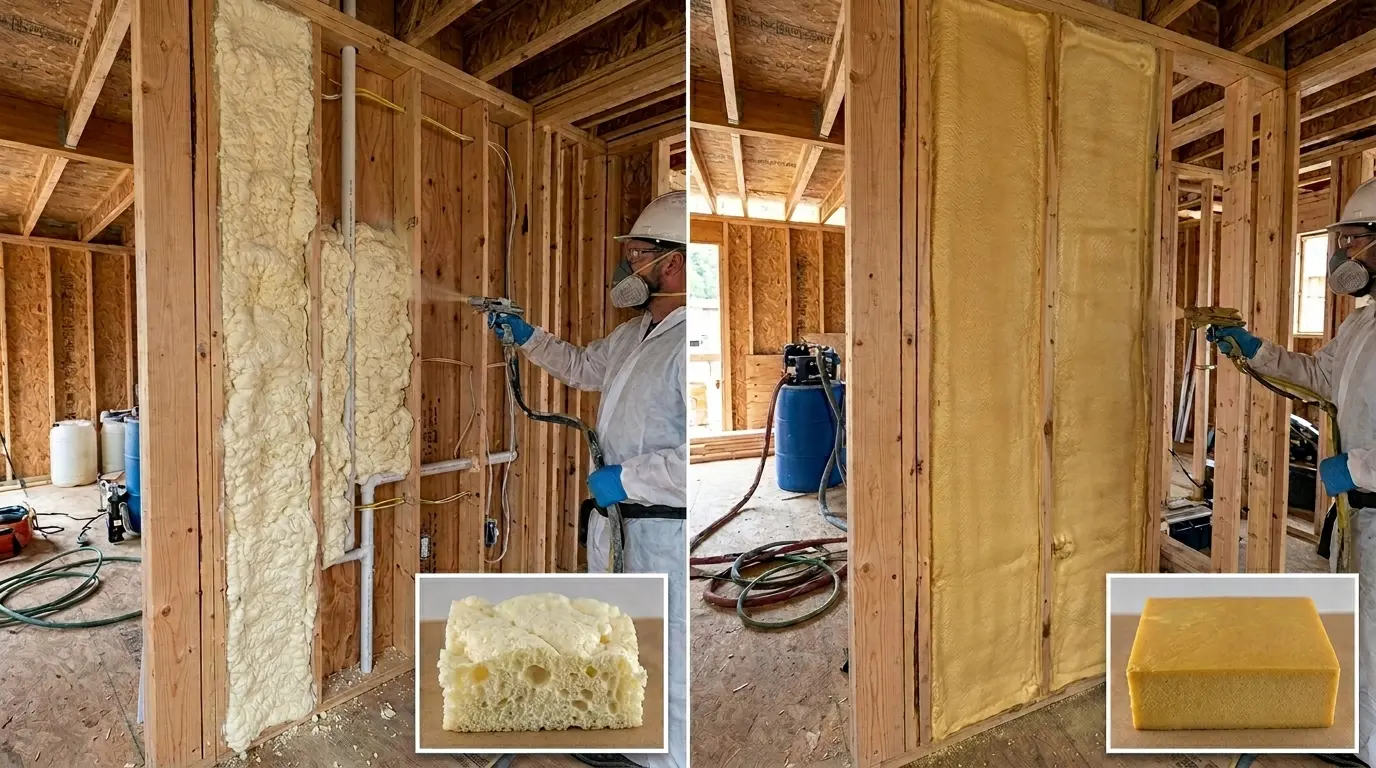
There are two main types of spray foam. Open-cell foam is lighter and less expensive, expanding significantly as it cures. It provides excellent sound dampening along with insulation properties. Closed-cell foam is denser and more rigid, offering the highest R-value per inch of any insulation material and adding structural strength to walls and roofs. It also acts as a vapor barrier, preventing moisture from passing through.
The application process requires expertise. The service uses special guns to mix two chemical components that react when combined, expanding to many times their liquid volume. The foam cures quickly, usually within minutes, though it needs 24 hours to fully cure before being covered.
Energy Efficiency and Performance
When comparing insulation materials, the R-value, which measures thermal resistance, is often the first metric people consider.
- Closed-cell spray foam offers an R-value of about 6-7 per inch
- Open-cell provides about 3.5-4 per inch
- Fiberglass batts offer approximately 2.9-3.8 per inch
- Blown-in cellulose provides about 3.2-3.8 per inch
However, R-value doesn’t tell the complete story. Traditional insulation’s effectiveness assumes perfect installation with no gaps or compression. In reality, studies have shown that poorly installed fiberglass insulation can lose up to 50% of its rated R-value.
Spray foam, by contrast, maintains its performance because it adheres to surfaces and fills every space, eliminating the air gaps that undermine traditional insulation.
While traditional insulation slows heat transfer through the material itself, it does little to stop air from flowing around it. Air leakage accounts for 25-40% of heating and cooling costs in typical homes. Spray foam acts as both insulation and an air barrier, stopping air movement completely.
Installation and Cost Comparison
Traditional insulation is considerably less expensive upfront. Fiberglass batts might cost $0.40-$0.80 per square foot for materials alone, with installation adding another $0.50-$1.50 per square foot. Blown-in cellulose runs slightly higher but remains budget-friendly.
Spray foam insulation costs significantly more initially. Open-cell foam typically runs $1.00-$2.00 per square foot installed, while closed-cell foam can cost $1.50-$4.00 per square foot. For a full home insulation project, spray foam might cost two to three times more than traditional options.
However, this upfront cost comparison doesn’t account for long-term value. Spray foam offers air sealing that typically reduces heating and cooling costs by 40-50% compared to traditional insulation. Depending on your climate and energy costs, spray foam can pay for itself through energy savings in 5-10 years. After that, you continue saving money for the life of the home.
Installation requirements also differ. Homeowners can install fiberglass batts themselves with minimal tools and experience. Spray foam, however, requires professional installation. The chemicals used in spray foam require protective gear during application and proper mixing ratios.
Also Read: Affordable Spray Foam Insulation Tips for Homeowners in NY
How Do You Make the Right Choice for Your Home?
Choosing between spray foam and traditional insulation depends on your specific situation. If you’re working with a tight budget and your home has simple, accessible spaces to insulate, traditional options may make sense. If you’re looking for maximum energy efficiency, have a complex structure, or plan to stay in your home long-term, spray foam’s benefits typically justify the higher cost.
Foam Insulation Solution specializes in professional spray foam insulation service, helping homeowners understand their options and providing expert installation. Give us a call today and make the first step toward better home insulation!